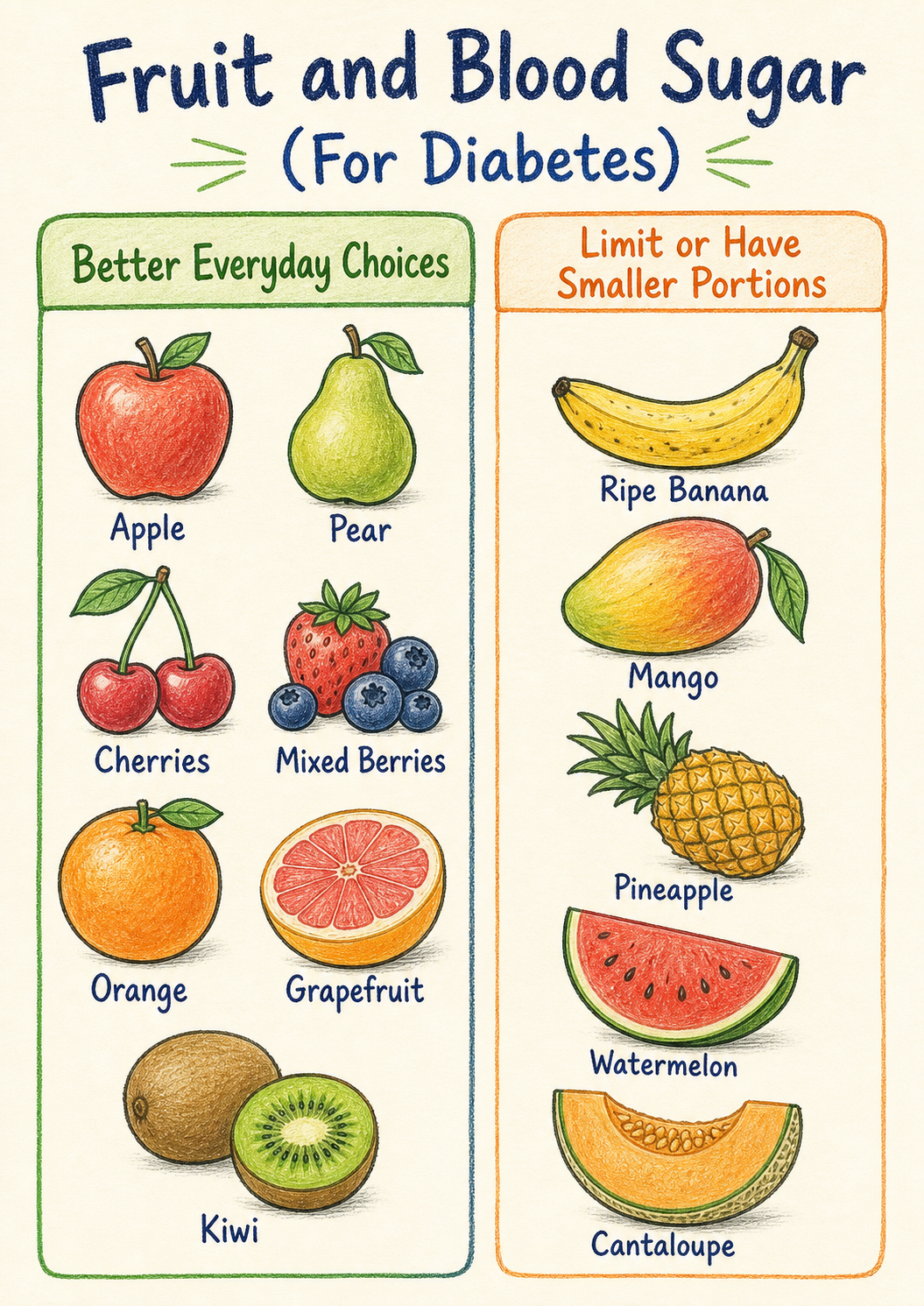
Whole fruits are not "banned" for diabetes — most people do better focusing on which fruits and in what form: whole, lower‑GI fruits like apples, pears, berries, cherries, citrus and kiwi are steadier choices, while very sweet, high‑GI fruits (mango, ripe banana, pineapple, watermelon, cantaloupe) and fruit juice push blood sugar up faster.
If you've been told to "watch your sugar", the first instinct is often to drop fruit altogether. That instinct is mostly wrong. The thing that matters is which fruit, in what form, and how much.
Whole fruit behaves differently from juice
A whole apple and a glass of apple juice are not the same drink. The whole apple comes wrapped in fibre, water and structure that slow down how quickly its sugar reaches your bloodstream. Juice strips most of that out — what's left is fast sugar with very little to slow it down. In people with diabetes, eating whole fruit is consistent with good glycaemic control; fruit juice tends to push glucose up faster.1
"In what form" is the part that gets missed. The same fruit, blended into a smoothie or pressed into juice, hits the bloodstream much faster than the same fruit eaten with a fork.
Which fruits are steadier — and which to limit
As a rough working rule:
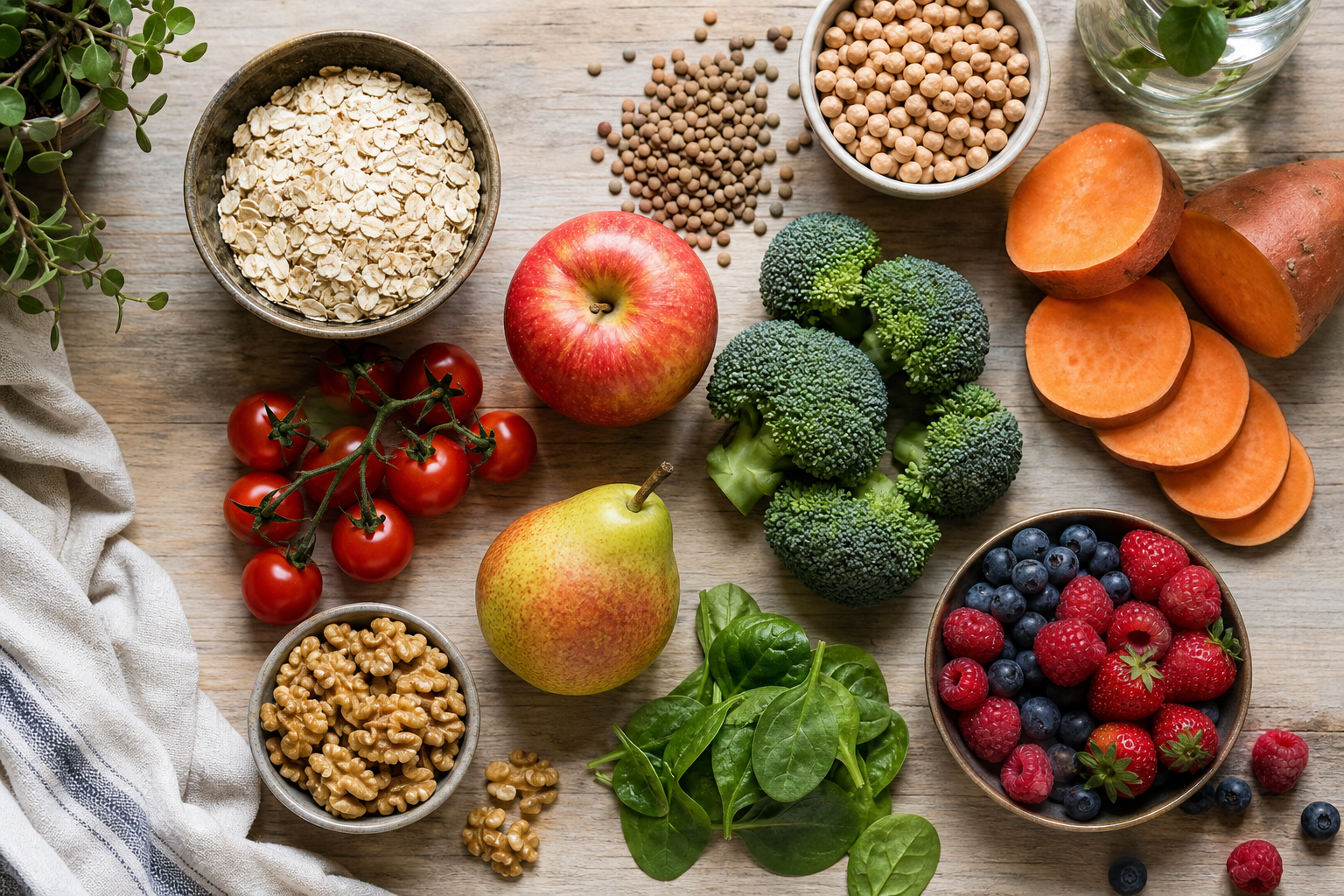
- Steadier choices (lower GI, more fibre): apples, pears, berries (strawberries, blueberries, raspberries), cherries, citrus (oranges, mandarins, grapefruit), kiwi.
- Spikier choices (higher GI or very sweet): mango, ripe banana, pineapple, watermelon, cantaloupe — and any of the above as juice or dried fruit.
Spikier doesn't mean "never". It means smaller portion, eaten with a meal rather than alone, and not back-to-back with other fast carbs.
How much is sensible?
A useful default for a single sitting is about a fist-sized portion of fresh fruit, or roughly a small bowl of berries. If you're going for a sweeter fruit (mango, pineapple), make the portion smaller and pair it with something with protein or fat — a few nuts, a piece of cheese, plain yoghurt — so the sugar doesn't arrive alone.
Spreading fruit across the day, rather than three pieces in one sitting, is usually gentler on blood sugar.
A Hong Kong note on fruit drinks
Some of the highest-sugar things people drink in Hong Kong are framed as "fruit": bottled fruit juices, fresh-pressed sugar-cane and watermelon juice from street stalls, sweet smoothies from cha chaan tengs, and 鮮榨果汁 sold by the bottle. None of these behave like whole fruit. If you're trying to keep post-meal numbers calmer, treat fruit drinks the same way you'd treat a soft drink, not the same way you'd treat an apple.
If you're not sure where to begin, Glukky is a small companion app that handles the above for you.
If you'd like the matching everyday numbers — what "after-meal" actually means in mmol/L — see our piece on blood sugar targets after meals. For the bigger picture on why GI matters and where it doesn't, see glycaemic index explained.